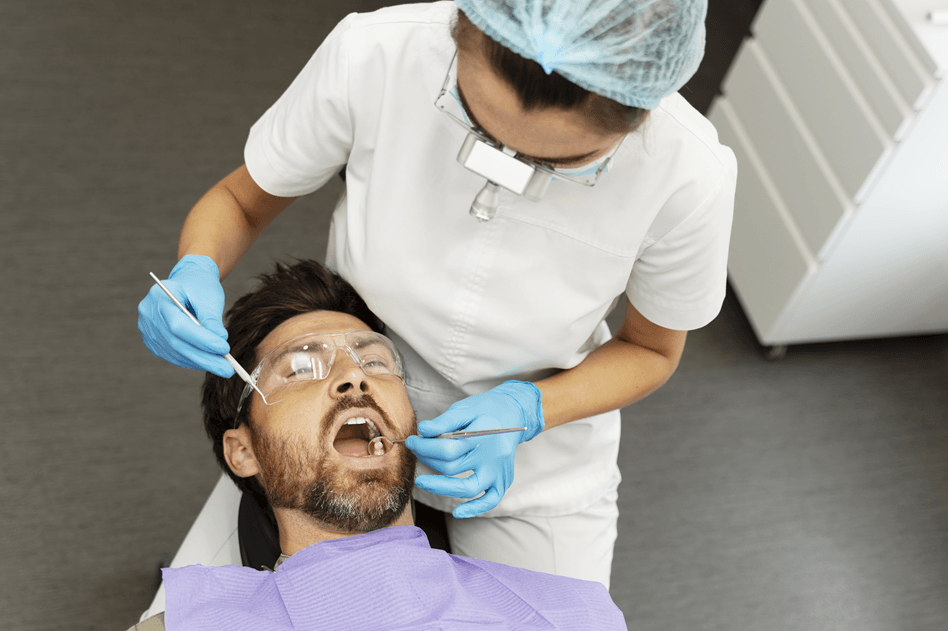
Scenarios such as the sudden onset of a severe toothache, breaking a tooth while eating or falling and knocking a tooth out are all extremely distressing. You are often left clueless and anxious as to what the next step should be. Not all dental problems are of the same nature, and while some can be addressed at a routine appointment, others can get worse if not addressed immediately.
When you have a dental emergency in Gurgaon, it is important that you have some basic first aid knowledge in order to help yourself and others in need. A severe toothache, a cracked tooth, and a knocked-out tooth are just a few of the many dental emergencies. If you have any of these dental problems, it is important to contact a dentist as soon as possible to address the problem and prevent further issues. Our team at DentaAesthetica will be happy to help you.
What is a Dental Emergency?
When there is a problem with your teeth, gums, or mouth that requires urgent attention, it is a dental emergency. Some common instances are broken or knocked-out teeth, severe toothache, dental infections, and injuries that cause bleeding or swelling.
Not all chipped teeth require emergency care. Some dental problems can definitely wait. However, severe pain, uncontrolled or profuse bleeding, facial swelling, and injuries should never be ignored. If you are having problems breathing or swallowing, or have rapidly spreading facial swelling, seek emergency care.
How to Deal with a Broken or Chipped Tooth
A minor tooth fracture may still expose the inner layers of the tooth. This can happen from biting down on a hard surface or taking a hard fall.
Gently rinse the mouth with warm water to remove food. If the fracture has caused the gum to bleed, apply gentle pressure with clean gauze. A cold compress may help with swelling.
If the broken tooth piece has come off, bring it to the dentist in a container and try to avoid chewing with that side of the mouth. Keep away from hard foods that may cause further damage.
Broken or chipped teeth should be examined by a dentist to assess the level of damage and sensitivity. Depending on the case, treatment may include a filling or bonding, a crown, or a root canal.
What to Do if Your Tooth Gets Knocked Out
A knocked-out tooth is a true dental emergency. The sooner you act, the better the chance of saving the tooth.
To touch only the crown of the tooth, pick it up by its top. Do not scrub the tooth, and do not use soap or other detergents to clean the tooth.
To keep the tooth moist, it may be placed in milk or a tooth preservation solution. Plain water should not be used to store the tooth. Do not let the tooth dry out. Contact your dentist immediately.
Contact your dentist as soon as possible. Time is of the essence. A knocked-out baby tooth will not be reinserted.
What to Do for a Severe Toothache
Symptoms of a severe toothache can make it difficult to eat, sleep and concentrate. It can be caused by decay, a cracked tooth, an inflammation inside a tooth, or an infection.
Floss and brush the affected area. In case of swelling, use a cold compress.
Don’t take leftover antibiotics, and don’t drain the swelling yourself. If your pain is severe and persisting, you need to see a dentist as soon as possible.
In case your toothache is accompanied by fever, facial swelling and pus, this may mean you have an infection, and you need to see a dentist as soon as possible.
When Should You Seek Emergency Dental Care?
You need to see a dentist as soon as possible if your tooth is broken, knocked out, or swollen to the extent that it means there is an infection. The dentist may take an X-ray and give you a recommendation.
You need to see a dentist as soon as possible if you have swelling to the extent that it blocks your airways or obstructs your swallowing. However, you need to go to the nearest emergency room first.
Prevention is Always Better Than Cure!
Simple, everyday habits can keep dental disasters at bay. Practice good oral hygiene to help prevent problems from becoming painful. Chewing ice and hard objects can crack teeth and should be avoided. Use a mouthguard for high-contact sports, and get cavities and cracked teeth treated as soon as you discover them. Grinding your teeth? Ask your dentist about a night guard.
Conclusion
No one wants a dental emergency, but knowing how to handle one can be comforting. Don’t ignore a broken tooth or toothache! A broken tooth often means the nerve has been damaged, and if it is not assessed quickly, complications can occur. And a lost permanent tooth needs to be replaced ASAP. Symptoms often mean something is wrong, and you should see a dentist to be safe. Don’t try to Google and diy at home dental treatments! Looking for guidance and treatment for a dental emergency in Gurgaon? Contact us at DentaAesthetica! Acting quickly can improve your treatment options and get you back to normal faster!
Frequently Asked Questions
1. Is a broken tooth always a dental emergency?
Small chips usually do not require emergency care; however, a significant break, or one that causes pain or bleeding, is a dental emergency. Contact your dentist immediately for advice.
2. How quickly should I get treatment for a knocked-out tooth?
Get to your dentist as quickly as possible. The best chance of saving a knocked-out permanent tooth is if it is treated within 30 minutes of the accident.
3. Can a severe toothache go away on its own?
Toothaches may go away on their own; however, the cause of the pain may not resolve and can still require treatment. Swelling and or a fever also require immediate treatment.