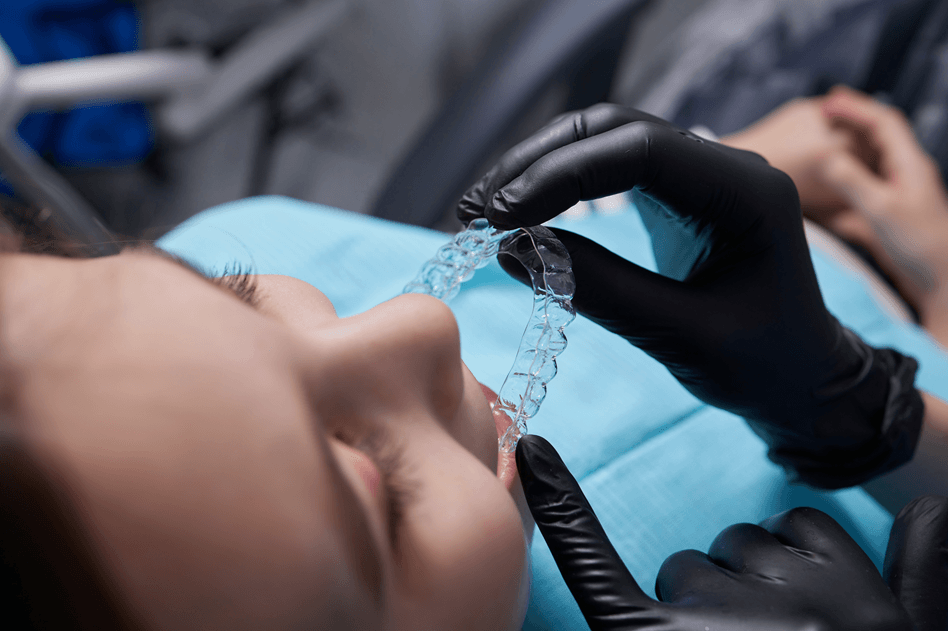
The first thing that comes to mind for many people when they think about Invisalign is the ability to close small gaps between teeth or fix mildly crooked teeth that are not perfectly aligned. Although that is definitely a common and popular use for the helpful product, the advances in modern dentistry allow for so much more.
One of the most common questions we are asked in consultations is, does Invisalign really help fix gaps as well as overbites and underbites?
These issues, in addition to being a cosmetic concern, also affect the way you speak, the way you eat, the level of confidence you have in the way you smile, and the ease of maintaining your oral hygiene.
At DentaAesthetica Dental Clinic, we see many patients from Delhi and from the surrounding areas who assume that their bite concern is too complicated to be solved with clear aligners. In fact, many of these patients have lived with bite issues for years, and several are self-conscious about the large gaps in their smiles. Fortunately, as a result of the improvements and innovations in the field of dentistry, we are now happy to inform patients that their concerns can actually be addressed with the use of Invisalign.
Take a look at how the aligners work and read more to find out if they can fix your gaps as well as overbites and underbites.
Why Bite Problems Are Important to Fix
Believe it or not, most people think the only reason to fix tooth alignment is for cosmetic purposes.
The biggest and most obvious reason is that a straight (and more aligned) smile brings more confidence, and perfectly aligned teeth and a smile also help people eat and speak better.
When your bite doesn’t meet correctly, this can lead to issues:
- Impact when chewing
- Unbalanced wear on teeth
- Discomfort in the jaw
- Issues speaking
- Greater chance for dental concerns
Orthodontists strive to improve the alignment of the teeth and how the upper and lower jaws function.
Invisalign treatment ensures both aesthetics and function.
What is an Overbite?
An overbite is when the upper teeth overlap the lower teeth to a greater degree.
Slight overbites are normal and are often not a concern. However, larger overbites can impact teeth and jaws in a negative way.
Those people who have larger overbites tend to have:
- Excessive wear on teeth
- Strain in the jaw
- Issues biting some foods
- Changes to the shape of the face
A lot of people are amazed to discover that overbites can be treated with Invisalign.
Invisalign uses a specific strategy with a series of aligners to create a positive change in the relationship of the jaws.
What is an Underbite?
An underbite is the opposite of an overbite.
In this case, the upper teeth are behind the lower teeth when the jaws are closed.
Underbites may impact facial symmetry and function, such as chewing and speaking, and can vary from mild to severe.
A common belief among patients is that all underbites need surgery or need to be corrected with traditional braces. Although some severe skeletal underbites may need surgery, most cases that are mild to moderate in severity can actually be corrected with Invisalign.
Invisalign utilizes advanced technology to allow orthodontists to plan movements of teeth and how they relate to the bite, and completely transform the bite.
It is important to understand that treatment with Invisalign also depends on the unique dental anatomy of the individual and the severity of the underbite.
For this reason, it is always important to get a professional consultation.
Understanding Gaps Between Teeth
The number one reason people seek orthodontics is due to gaps in their teeth.
Some people even embrace having a small gap in their teeth; however, it can be difficult to maintain proper oral hygiene and can trap food.
Invisalign is extremely successful in closing gaps in teeth because it utilizes a force to move teeth into a desired position.
Many people can even see results in the first few months.
How Does Invisalign Move Teeth?
The technology that supports Invisalign has become highly advanced, and a small fact many patients are surprised to learn is that as each aligner progresses, the planned movements of teeth become smaller.
To help visualize this, think about your destination and how, instead of driving all the way there and having to make one giant movement, you break the trip up into smaller movements.
Each Invisalign aligner brings you closer to your goal. They may be small changes, but over time, they make a big difference.
Since these changes happen slowly, most people find the entire process of Invisalign to be both comfortable and easy to predict.
Does Invisalign Work for Everyone?
Not all spaces and not all bites are the same.
Invisalign’s success depends on:
- how severe the spacing issue is
- the current alignment of the teeth
- the condition of the jaw and
- the patient’s overall oral health
- the patient’s compliance
Something a lot of people don’t consider is how long they actually have to wear the aligners.
The average patient of Invisalign is recommended to wear the aligners for about 20 to 22 hours a day. The full benefit of the aligners is only achieved with consistent wear.
Even the most sophisticated treatment plan is completely dependent on compliance.
Self-Evaluating for Invisalign
There are several pictures on the internet that show how people look after doing Invisalign. A lot of people try to self-evaluate how eligible they are for Invisalign by looking at these pictures.
While these images can help get a rough estimate of what to expect, nothing can replace a professional evaluation.
To determine eligibility, orthodontists first have to:
- examine the mouth
- analyze the bite with a full
- set of digital scans
- create a treatment plan based on the evaluation
- align patient and provider expectations
At DentaAesthetica Dental Clinic, our patients get to see a full digital model of their teeth, and as a result, a full understanding of their orthodontic concerns.
This model also explains how the placement of the teeth can be improved with a clear understanding of the advantages and outcomes of doing Invisalign.
Invisalign is a clear aligner system that is preferred by many because it helps people improve their dental concerns and greatly enhances their smile.
There are important added benefits to Invisalign treatment that many patients appreciate. Some of these include the following:
- Feel more confident to smile
- Improved oral hygiene
- Chew more efficiently
- Less crowded teeth
- Improved bite
Invisalign treatment creates more than an aesthetic smile. It improves the function of the mouth and overall health.
For many adults, Invisalign is well worth the cost for the benefits received.
Why the Adults in Delhi are Getting Invisalign
There are many reasons adults avoid orthodontic treatment. One of those reasons is the visibility of traditional braces.
Many professionals, business owners, and parents do not want the added pressure of having to wear traditional, metal braces.
Invisalign offers an almost invisible alternative.
The aligners are not easily detected during the many day-to-day, and often formal, interactions and activities that adults face.
Invisalign treatment is done without the pressure of an audience during the treatment process.
In Closing
Can Invisalign correct overbites, underbites, and spacing? In the majority of the situations, yes.
Invisalign has greatly grown as a brand and a treatment to be more than just a cosmetic treatment to straighten teeth. In addition, today, many spacing and overall bite issues can be addressed.
The importance is in the detailed treatment and the supervision along the way.
At DentaAesthetica Dental Clinic, our team works with you to provide the best and most personalized treatment plan using Invisalign to meet your smile goals.
The pathway to a more confident and healthier smile is right ahead of you.
Frequently Asked Questions
1. Can you fix an overbite with Invisalign?
It is possible to fix most mild and moderate overbites with Invisalign. The severity of the overbite will affect the results, as well as the treatment plan.
2. Can you close the gaps with Invisalign?
Invisalign is effective in closing gaps between teeth, as it works by customizing the gradual movement of teeth to bring them into the desired alignment.
3. Can you correct an underbite with Invisalign?
Most mild to moderate underbites can be treated with Invisalign, but for the more severe cases, a combination of other orthodontic treatment or surgery may be required, and that can be addressed at the time of the consultation.